Key takeaways
- Meta's VR Glasses, announced at Connect on 23 September 2026, weigh about 100 grams on the face and ship in spring 2027 for $1,299.99. The computer and battery live in a 300-gram puck in your pocket.
- That is roughly a fifth of the 515-gram Quest 3 and a quarter of the Apple Vision Pro. The weight did not disappear; it moved down a cable.
- The path from 2018 to here runs through five Quest headsets, one $3,499 Apple detour, Samsung's Android XR headset and two generations of Ray-Ban glasses.
- The trade-off for every gram saved is a smaller field of view, a tethered puck or a thinner feature list. Pick two.
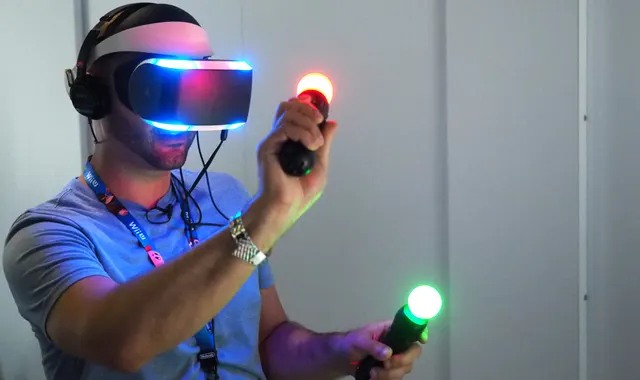
The last time VRExtasy published a headset review, the headline device was an HTC Vive tethered to a desktop tower, tracked by two laser boxes screwed into the wall, and the big question was whether the cable would strangle you before the nausea did. That was 2018. In September 2026 Mark Zuckerberg walked on stage wearing something that looks like thick sunglasses, called it VR Glasses, and said it weighs about the same as a chocolate bar.
Both things are true, and the distance between them is the story of the industry. So here is the diet, year by year, with the numbers that matter and the marketing that does not.
2019: the cable gets cut
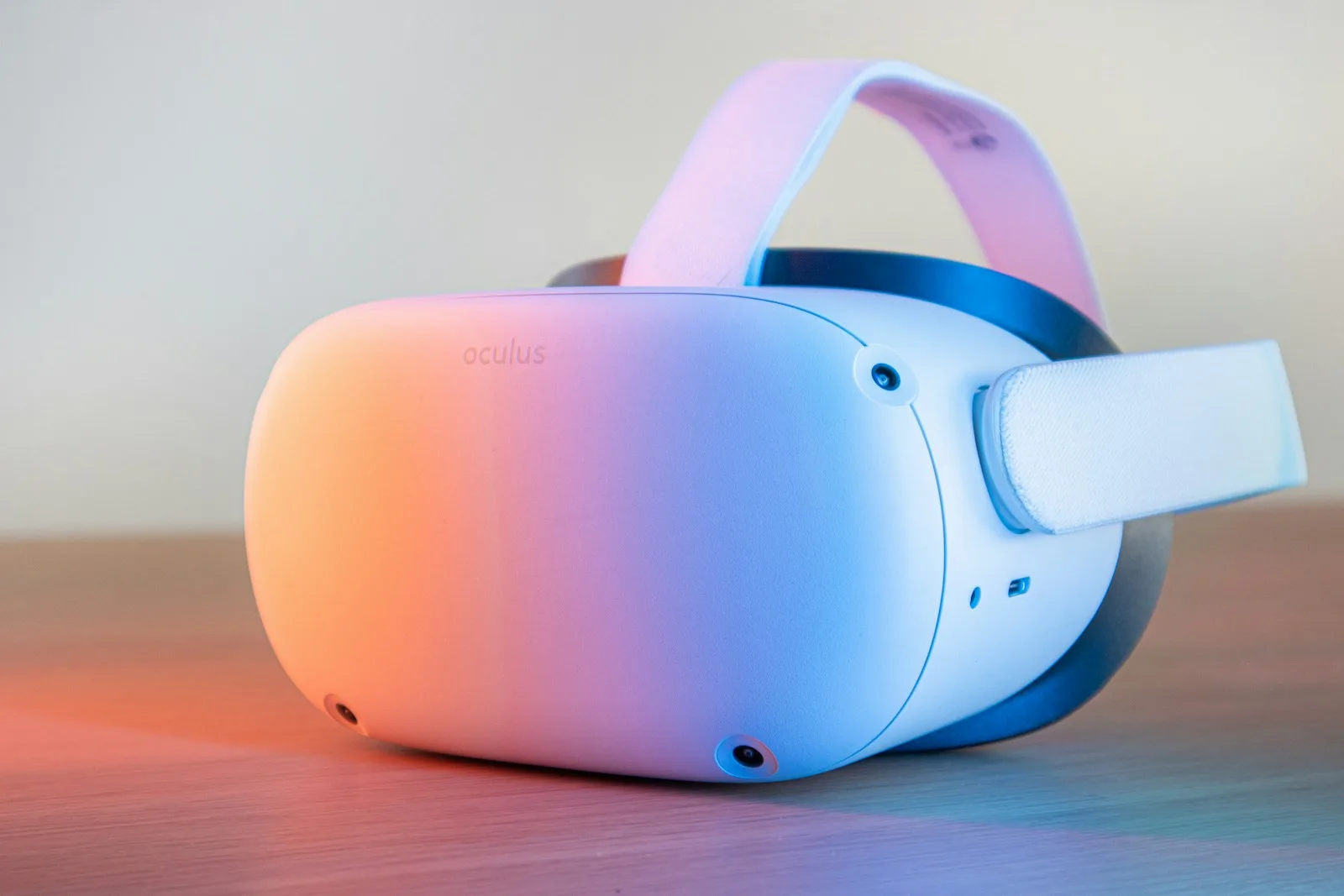
The original Oculus Quest arrived in May 2019 at $399 and did one thing nobody had done well: it worked without a PC, without base stations and without a cord. It weighed 571 grams, which is heavier than the Quest 3 that followed four years later, but it did not matter. For the first time you could unbox a headset, put it on in the living room, and be inside a game in two minutes. The Vive and the Rift became enthusiast hardware overnight.
In December of the same year Meta, still called Facebook, shipped hand tracking to the Quest as a software update. That date is worth remembering, because everything in 2026 traces back to it.
2020 to 2023: Quest 2 eats the market
Quest 2 launched in October 2020 at $299 and became the first VR headset to sell in the tens of millions. It was lighter, at about 503 grams, sharper, and cheap enough that people bought it for a single game. If you owned a VR headset between 2021 and 2023, statistically it was this one.
Quest Pro, the $1,499 "work" headset of October 2022, was the first sign that Meta wanted to go somewhere else. It had face tracking, pancake lenses that made the whole optical stack thinner, and a battery on the back of the head to balance the weight. It sold poorly and got discounted fast, but its lenses are in every Meta headset since. Quest 3 arrived in October 2023 at $499 and 515 grams, with colour passthrough good enough that mixed reality stopped being a demo.
2024: Apple makes it heavier, on purpose
Apple Vision Pro went on sale in February 2024 at $3,499, and it was the opposite of a diet. Aluminium, glass, around 600 to 650 grams depending on the light seal, with a battery on a cable because the headset itself was already too heavy. It had the best displays anyone had shipped, eye tracking so good that you select things by looking at them, and no controllers at all. It also proved that the public does not spend a used-car budget on a face computer, however beautiful. Apple cut production within the year.
Vision Pro still mattered. It made "spatial computing" a term, it made pinch-and-look the default interface for the next generation, and it made Meta rush out the $299 Quest 3S in October 2024 to remind everyone where the volume was.
2025: the glasses arrive, with a catch
Two launches in 2025 reset the shape of the category. In September, Meta shipped Ray-Ban Display, ordinary-looking glasses with a small screen in the right lens and a wristband that reads the electrical signals in your forearm so you can click by pinching your fingers. They cost $799 and sold out. In October, Samsung's Galaxy XR arrived at $1,799, the first headset running Google's Android XR, and the first real competitor to the Vision Pro that did not cost as much as a Vision Pro.
Both are important for the same reason: they split "VR" into two products. One is a headset you use sitting down for games, films and work. The other is a pair of glasses you wear outside. Meta's 2026 announcement is the first serious attempt to make those the same object.
September 2026: Project Phoenix
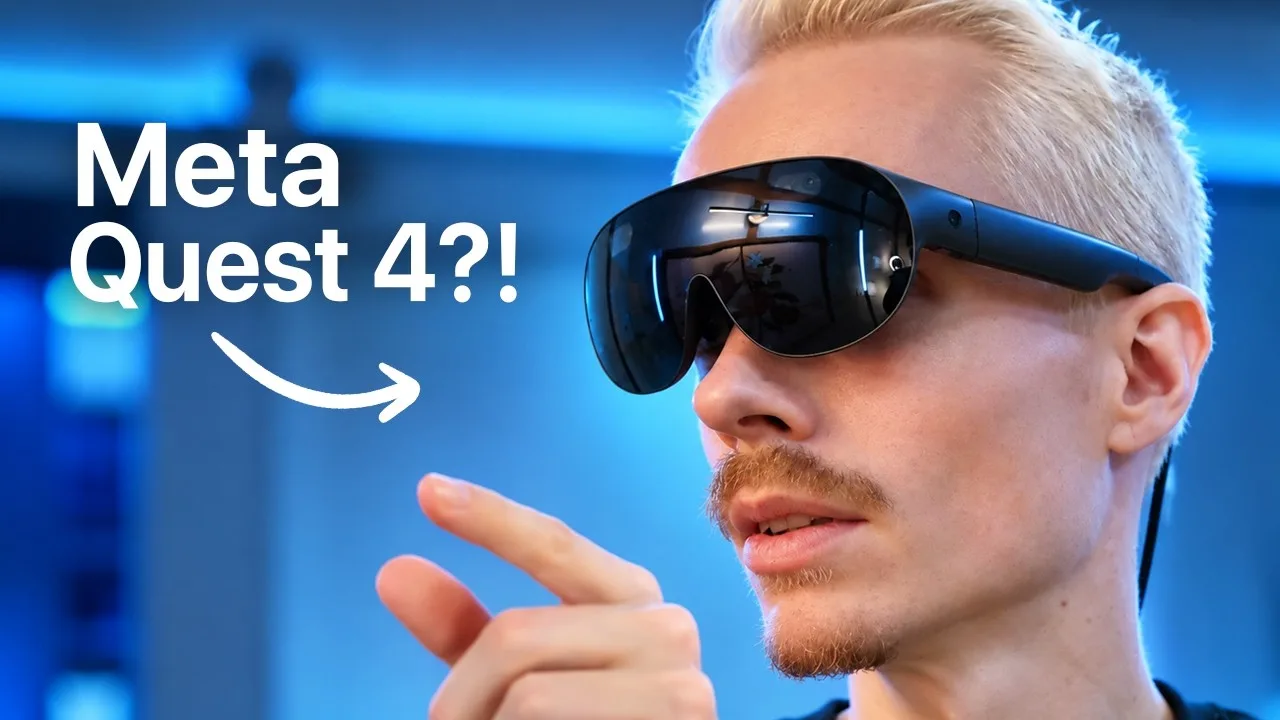
At Connect on 23 September 2026, Meta unveiled what it is calling VR Glasses, developed under the name Project Phoenix. The numbers that matter:
- Weight: about 100 grams on the face. Meta's comparison is "five times lighter than Quest 3", and the arithmetic on 515 grams checks out.
- The puck: compute, battery and storage live in a roughly 300-gram unit that goes in a pocket, connected by a thin optical fibre cable. Yes, the cable is back. It is a much nicer cable.
- Displays: micro-OLED. Meta's own material talks about a 5K-class picture; UploadVR's teardown of the spec sheet put it at 2.4K per eye. Those are two ways of counting the same panels, and we will know which one feels true when it ships.
- Input: no controllers in the box. Hands, eyes and, presumably, the wristband.
- Price and date: $1,299.99, spring 2027. Pre-orders are not open yet.
Where the weight went
It is worth being precise about the trick, because the trick is the whole product. A Quest 3 is 515 grams because it carries a Snapdragon chip, a battery, speakers, cameras and a fan on your forehead. Meta's glasses carry the displays, the lenses, the cameras and very little else. Everything hot and heavy moved into the puck, which is why the cable is not optional. Apple did half of this with Vision Pro's external battery; Meta did all of it.
What you give up is harder to see in a press photo. Glasses-sized optics mean a narrower field of view than a Quest. A puck means one more thing to charge and one more thing to leave on the train. No controllers means every game built for thumbsticks needs a rethink, which is why the launch library will be the thing to watch, not the weight.
The scoreboard, 2018 to 2027
| Device | Year | Weight | Launch price | Needs |
|---|---|---|---|---|
| HTC Vive | 2016 | ≈555 g | $799 | PC, base stations, cable |
| Oculus Quest | 2019 | 571 g | $399 | nothing |
| Quest 2 | 2020 | ≈503 g | $299 | nothing |
| Quest 3 | 2023 | 515 g | $499 | nothing |
| Apple Vision Pro | 2024 | ≈600–650 g | $3,499 | external battery |
| Galaxy XR | 2025 | ≈545 g | $1,799 | external battery |
| Meta Ray-Ban Display | 2025 | ≈69 g | $799 | wristband |
| Meta VR Glasses | 2027 | ≈100 g + 300 g puck | $1,299.99 | puck, cable |
Verdict
Seven years ago the industry's problem was that nobody wanted to wear the thing. The Quest solved the cable, Vision Pro solved the interface, Ray-Ban solved the looking-normal part, and Meta's 2027 glasses are the first product that tries to solve all three at once by hiding the computer in your pocket. Whether $1,300 for a tethered pair of goggles is a bargain or a Quest Pro repeat depends entirely on what runs on them next spring. The weight, at least, is no longer the excuse.