Key takeaways
- The Men's Gallery, a Melbourne strip club, publishes a 360-degree lap dance on YouTube every month. This episode stars Honey and Hazel Rose and runs just under four minutes.
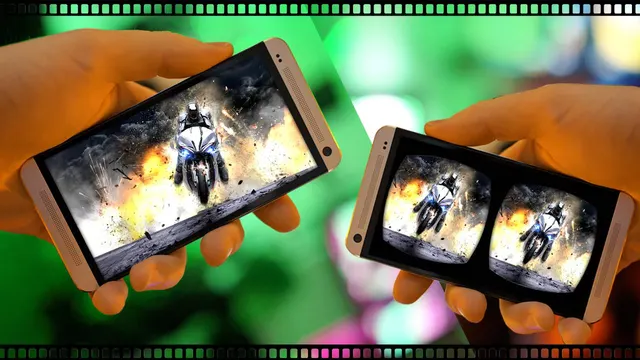
- It works on a phone by dragging the view, in Cardboard, or in any headset with the YouTube VR app. Sit down for it. Seriously.
- The lap dance is the perfect VR genre because its one golden rule, look but don't touch, is enforced by physics instead of a bouncer.
- It is a trailer, not a product: the club uses VR to sell the real chair. That is smarter than most of the metaverse.
Every strip club in the world runs on a single sentence: you can look, but you cannot touch. Entire architectures of velvet rope, dim lighting and large men in black shirts exist to enforce it. Then virtual reality came along and enforced it for free. There is no bouncer in a 360-degree video because there does not need to be one. You can lean in all you like. The pixels do not care.
That is the quietly brilliant idea behind the VR lap dance series from The Men's Gallery, the Melbourne venue that likes to call itself Australia's number one adult entertainment spot. Once a month they put a 360 camera in the chair, invite two of their dancers to do what they do, and upload the result to YouTube, where it sits politely behind an age gate. This month's episode belongs to Honey and Hazel Rose, and it is the one that made us think a little harder than a three-minute clip has any right to.
What you are actually watching
The setup is simple and that is the point. The camera takes the customer's seat. The room is the Gallery's private dance area, all red light and black upholstery, and the two dancers work the space around you for 3 minutes and 47 seconds. On a desktop you click and drag to look around. On a phone you just turn, and the video turns with you. In a headset, whether that is a cardboard viewer with your phone jammed inside or a Quest running the YouTube VR app, you are in the chair.
Honey and Hazel Rose know exactly where the lens is, which matters more than it sounds. Most 360 performance videos are shot for a room; this one is shot for a single point in it, and the choreography keeps circling back to that point. Eye contact in 360 is an odd thing. The dancers are looking at a camera, but you, three months later, in a flat on the other side of the planet, feel looked at. That is the trick the whole genre lives on, and these two sell it without ever breaking the fourth wall. It is suggestive, it is playful, and it stays on the right side of YouTube's rulebook, which means it is a lap dance in the way a trailer is a film.
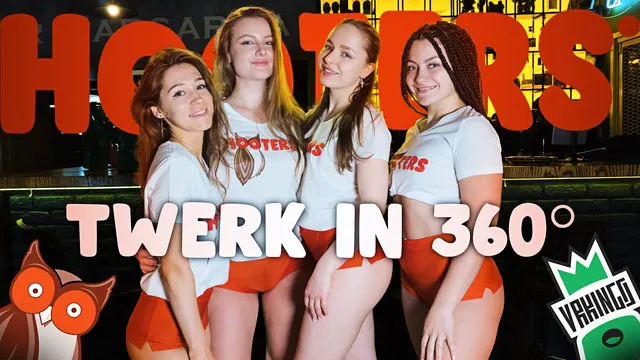
The video is age-restricted, so YouTube will ask you to sign in before it plays. That is also why the thumbnail above is ours, not theirs.
Why the lap dance was built for VR
Think about what a lap dance actually is as a piece of media. The performer controls the frame: she decides what you see and how close it gets. The audience is fixed in one spot and is not supposed to move. There is one viewer, not a crowd. Distance is the whole language of the thing, from across the room to much closer than that, and the drama comes from the gap closing and opening again.
Now list what 360 video does well. It locks the viewer in one spot. It gives the performer total control of the frame, because the frame is the room. It turns distance into the main effect, since objects in 360 feel exactly as far away as they are and a face at arm's length lands harder than any close-up ever has. It does not handle crowds, movement or editing gracefully, which is why 360 concerts and 360 football never really took off.
Match those two lists and the conclusion writes itself. Sports needed VR to be something it is not. The lap dance needed VR to be exactly what it already is. Of all the things we have strapped to our faces over the years, from roller coasters to Rihanna to meditation apps, this is the rare case where the medium and the message were made for each other, and nobody at a tech conference will ever say so out loud.
The Tuesday test
Picture a man we will call Dario, because that is not his name. It is a Tuesday night, it is raining, and he has a secondhand Quest that mostly runs a beat-matching game and a free app that lets him watch films on a fake cinema screen. He finds the Gallery's video the way everyone finds everything, by accident, and tells himself he is watching it for the technology.
What happens next is the interesting part. The first thirty seconds he does what every VR first-timer does: he looks everywhere except where he is supposed to. Ceiling. Floor. The speaker in the corner. Then Hazel Rose walks into frame from the left, where no screen would ever have let her come from, and he stops looking at the room. By the two-minute mark he has leaned back in his real chair without noticing, because his body has decided someone is standing a little too close. At the end he takes the headset off, blinks at the rain, and says the word "huh" out loud to nobody.
We made Dario up. We did not make up the lean. That instinctive backwards shift is the most honest review a piece of VR can get, and it is the reason this clip is better evidence for the medium than most of the demos that get funded.
How to watch it properly
- Sit down first. The camera is at seated height. Standing up puts you a foot above the whole scene and ruins the illusion.
- Headset beats phone. The YouTube VR app on Quest plays 360 videos straight from your watch history. On a phone, use the YouTube app, not a browser, and look for the Cardboard icon.
- Headphones on. The audio is stereo rather than spatial, but it still does half the work.
- Sign in. The age gate is real and YouTube will not play it otherwise.
- Check the series. The Gallery uploads a new pairing most months, so if these two are not your type, the next episode is already in the queue.
The business angle nobody talks about
Here is the part we admire most. The Men's Gallery is not selling the video. YouTube's rules would not let them, and the age gate guarantees that nobody is watching this by accident. The video is a trailer, and the product is the chair in Melbourne, a very real ticket price and a very real bar tab. Every clip ends with the same unsubtle invitation to come and see the girls in person.
Compare that with the usual pitch for VR, which asks you to replace something real with something virtual and pay a subscription for the privilege. The Gallery flipped it. The virtual version is free and slightly frustrating on purpose, which is what makes it work as marketing. It is the strip-club equivalent of the smell of bread outside a bakery. Several billion dollars of metaverse spending could learn from a nightclub in Melbourne that figured out VR is better at making you want things than at giving them to you.
Verdict
As a lap dance, it is a tease, and it knows it. As a piece of VR, it is one of the clearest demonstrations of what 360 video is for, made by people who have never read a white paper about presence and do not need to. Honey and Hazel Rose are good at their jobs, the camera is in exactly the right place, and the whole thing costs you nothing except a YouTube login and a small, involuntary lean backwards.
Watch it in a headset, sitting down, with the lights off. Then go outside and look at the rain. You will understand the business model.