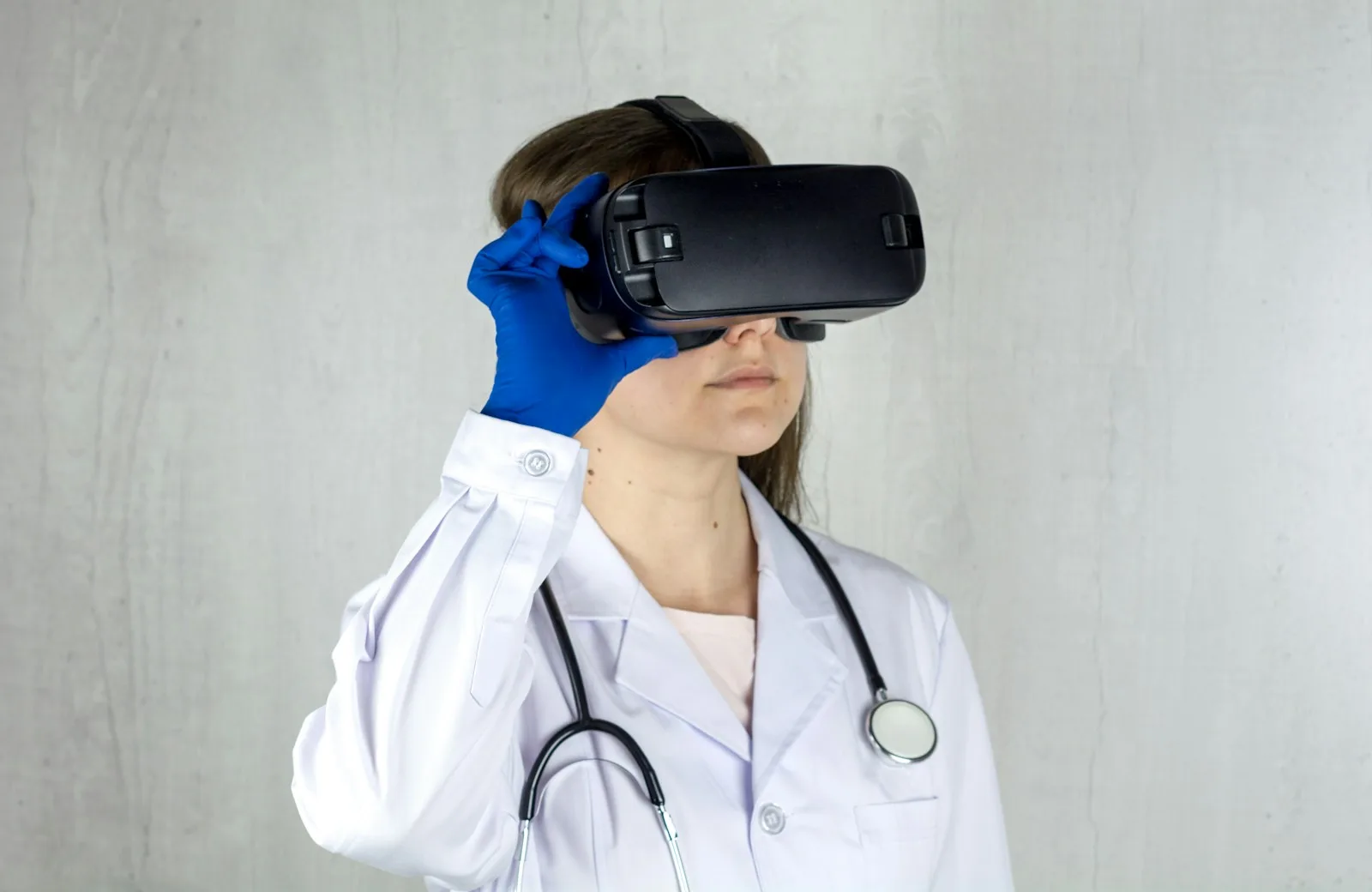
Key takeaways
- In a UCLA trial, surgeons trained in Osso VR scored 230 percent higher on a global assessment scale than a traditionally trained group, finished 20 percent faster and completed 38 percent more checklist steps. It was 20 people and Osso paid for it, so read it as promising, not proven.
- AccuVein's handheld scanner uses near-infrared light to project a live map of a patient's veins onto the skin, so the first needle is more often the last.
- MindMaze's MindMotion turns stroke rehabilitation into games, and VR exposure therapy is now a standard tool for PTSD and phobias.
- None of this needs a $3,499 headset. Most of it runs on hardware that costs less than a hospital bed sheet.
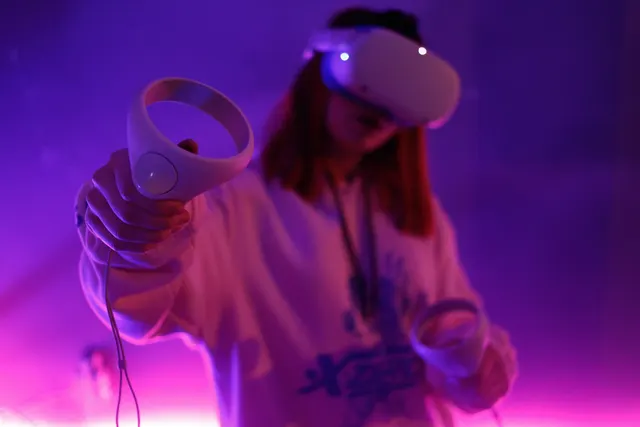
The most important VR demo of the last five years did not happen at a games show. It happened in a teaching hospital, with a resident holding two Quest controllers, drilling a hole in a virtual tibia that did not bleed, could not sue, and could be reset with a button. Medicine was always the obvious use for simulators; airlines have trained pilots that way since the 1930s. What changed after 2018 is that the simulator became a $300 consumer headset and the software caught up with the hardware. Here are the three applications that have survived contact with real hospitals.
Osso VR: rehearsing the operation
Osso VR was founded by Dr Justin Barad, an orthopaedic surgeon who noticed that the way surgeons learn new procedures, by watching, then doing, under supervision, in a theatre with a live patient, is roughly how you would design a system to produce nervous surgeons. Osso builds step-by-step simulations of specific operations, with the actual instruments and implants from the manufacturers, in a headset. You practise until the steps are automatic, then you meet the patient.
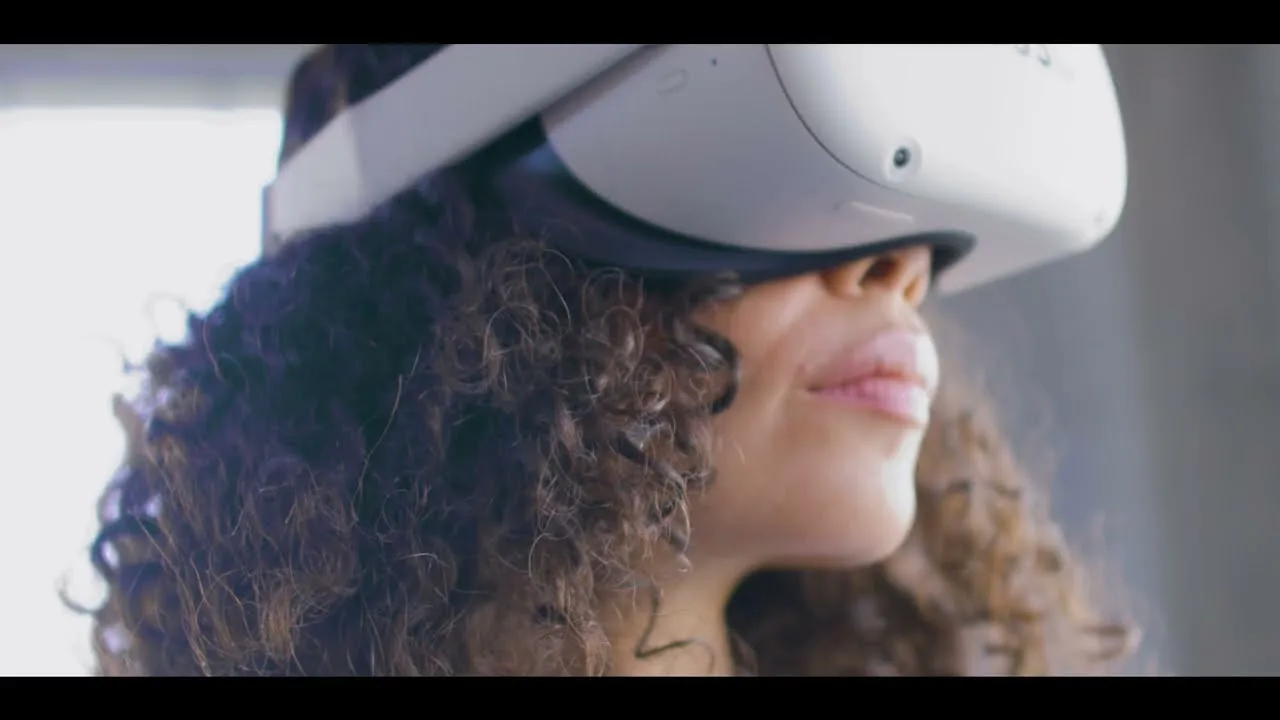
The number everyone quotes comes from a 2019 randomised trial at UCLA's David Geffen School of Medicine. Twenty participants learned tibial intramedullary nailing, the procedure for fixing a broken shin with a rod, either the traditional way or in Osso VR until they reached a set level of proficiency. Then they did it on a model, judged by assessors who did not know which group they were in. The VR group:
- scored 230 percent higher overall on a five-point global assessment scale,
- finished 20 percent faster, 615 seconds against 762,
- and completed 38 percent more steps correctly on the procedure checklist.
Now the caveats, because this is a site that reads to the end of the spec sheet. Twenty people is a pilot, not a verdict. Osso funded the study. The 230 percent is a rating-scale score, which is a measure of how the assessors graded the performance, not a claim that VR surgeons are three times better at surgery. What the trial does show, convincingly, is that a few hours in a headset moves a learner further than a few hours of watching. Since then Osso has signed up medical device makers and residency programmes across the US, and the headset in the surgeons' lounge has stopped being a novelty.
AccuVein: augmented reality you can put a needle in
Most augmented reality demos put a dragon on your desk. AccuVein puts your veins on your arm. The device is a handheld scanner that shines near-infrared light at the skin; haemoglobin in the blood absorbs it, the surrounding tissue reflects it, and the scanner projects the resulting map back onto the arm in real time, so the nurse sees exactly where the vein runs and how deep it sits. No headset, no app, no calibration. It is AR in the most literal sense: a computer adding information to the real world at the place you need it.
The use case is as unglamorous as it is enormous. Finding a vein is hard in children, the elderly, people with dark skin, people who are dehydrated, and anyone who has been stuck three times already by a nervous junior. Every missed attempt costs time, a cannula, and the patient's goodwill. AccuVein has been in hospitals for over a decade and has become the quiet proof that AR did not need to wait for glasses to be useful. It just needed to solve one small problem a thousand times a day.
MindMotion: a stroke patient's arm, in a game
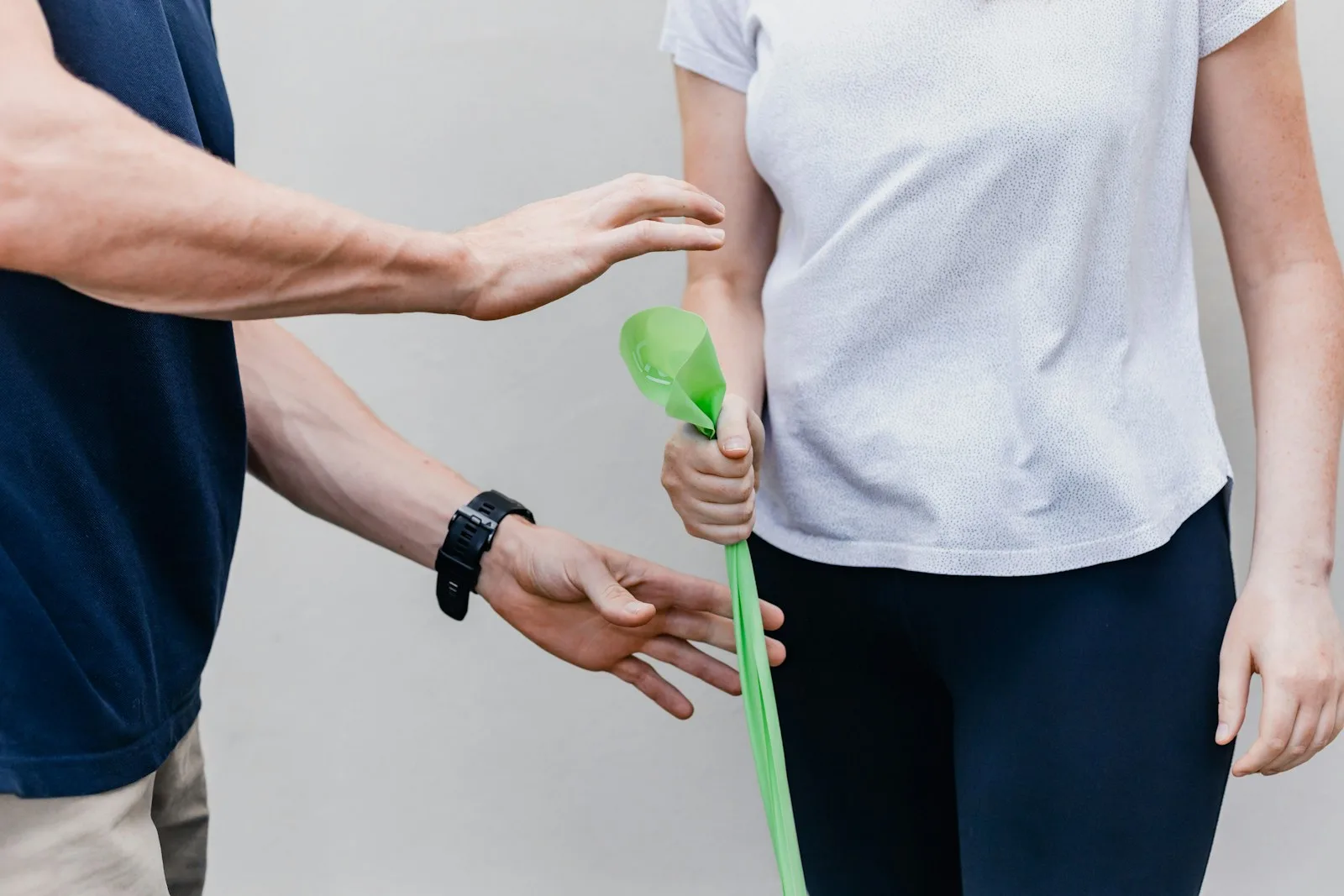
Recovering movement after a stroke comes down to repetition. The brain rewires around the damage, but only if the arm keeps trying, thousands of times, for months, past the point where any sane person wants to lift a cup again. Physiotherapists have known this forever. The problem was never the science; it was boredom, and the limited hours a therapist can give.
MindMaze, a Lausanne company spun out of the Swiss Federal Institute of Technology, built MindMotion to attack exactly that. A camera tracks the patient's movements and maps them onto games: reach for the fruit, steer the boat, catch the ball. The exercises are the same ones a therapist would prescribe, but the patient is playing, the system counts every repetition, and the difficulty adapts in real time. MindMotion GO, the lightweight version, is cleared by the FDA and is designed to go home with the patient, which is where most of the recovery actually has to happen.

Exposure therapy: the fear, with a pause button
The oldest clinical use of VR is still one of the best. Exposure therapy treats phobias and post-traumatic stress by confronting the fear gradually, in a controlled setting, until the body stops reacting. The trouble was always logistics. You cannot book a thunderstorm, a crowded market in a war zone, or a plane that takes off on demand. In VR you can, and a therapist can turn the intensity up and down with a slider.
Bravemind, developed at the University of Southern California's Institute for Creative Technologies, has been used with military veterans with PTSD for well over a decade, rebuilding specific scenarios with sound, smell and vibration so the memory can be processed rather than avoided. For phobias, the approach is simpler and the headsets are cheaper: spiders, heights, flights and public speaking all have off-the-shelf VR programmes now, some of them automated enough to run without a therapist in the room. The evidence base here is older and deeper than for surgery, and the hardware requirement is almost nothing.
What ties it together
Notice what none of these need: a $3,499 headset, a 100-gram pair of glasses, or an AI agent. Osso runs on a Quest. AccuVein is a torch with a brain. MindMotion uses a camera and a screen. The medical applications that have stuck are the ones that took one expensive, scarce thing, a surgeon's practice hours, a nurse's first attempt, a therapist's afternoon, and made it cheap and repeatable. That is a much less exciting sentence than "the metaverse will transform healthcare", and it is the one that turned out to be true.
Verdict
If you want to know whether VR is a real technology or an expensive toy, do not look at the games charts. Look at where people with budgets and liability lawyers chose to put it. Hospitals did, carefully, after trials, for specific jobs. The 230 percent headline deserves its asterisk, but the direction is not in doubt: the headset has a place in medicine now, and it earned it one tibia at a time.